







I approached Duet Dating as a social app for people who want more than a quick swipe through profiles. Its central idea is simple: help you meet someone who feels compatible, then move the conversation toward a real connection. That makes it appealing if you find conventional dating apps tiring, especially when endless browsing produces plenty of matches but very little meaningful conversation.
My overall impression is mixed in a useful way. The app has a clear purpose and a more relationship-focused mood than many mainstream alternatives, but the experience depends heavily on how actively people around you participate. It is free to install, aimed at adults, and has already passed the million-install mark, so it is not an obscure experiment with an empty audience. At the same time, a 3.8 average from roughly 6,800 ratings suggests that users’ experiences are varied rather than universally smooth.
What using Duet Dating feels like in everyday life
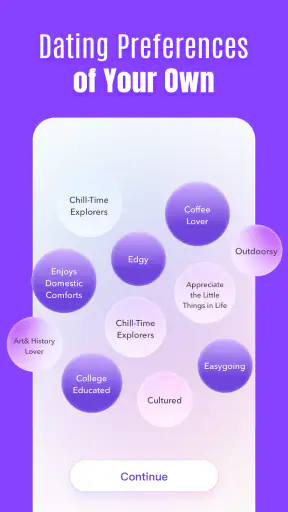
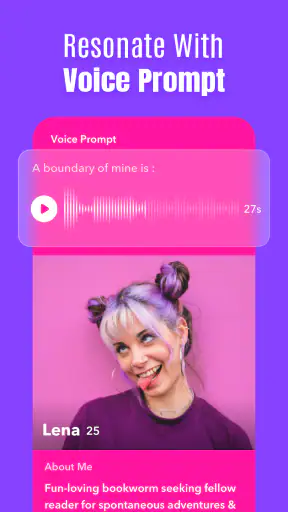
The developer, Duet - Meet People You Resonate With, presents the app as a place to resonate and date with a new match. I think that positioning matters because it sets a different expectation from an app built mainly around rapid visual decisions. You are not simply looking for the largest possible stream of profiles; you are trying to identify people whose outlook, communication style, and intentions might fit your own.
That makes the app particularly suitable for someone who prefers a smaller number of more considered conversations. For example, imagine checking your phone after work, finding a promising match, and wanting to understand the person rather than immediately decide whether to keep swiping. A good routine is to open the app with one question in mind: what would I genuinely like to know about this person? That approach helps prevent the conversation from becoming a string of empty greetings.
It is less suitable for someone who wants instant results, a very large pool in every location, or a dating service that feels like a fast-moving marketplace. The audience available to you will depend on where you live and how many nearby members are active. In a smaller town, the experience may feel more limited than it would in a dense urban area, regardless of how well the app itself is designed.
A calmer alternative to ordinary swipe routines
Compared with the usual swipe-first dating services, Duet Dating appears more focused on the quality of a potential match than on keeping you in a rapid loop. That can be refreshing. I find that a slower rhythm makes it easier to notice whether a profile gives you something concrete to respond to, rather than judging every person from a single photo and a few hurried words.
The trade-off is that a calmer approach can feel less immediately rewarding. If you enjoy constant novelty, frequent new suggestions, and quick mutual reactions, a larger established dating platform may suit you better. Duet Dating makes more sense for people willing to spend a little time reading, thinking, and replying with intention.
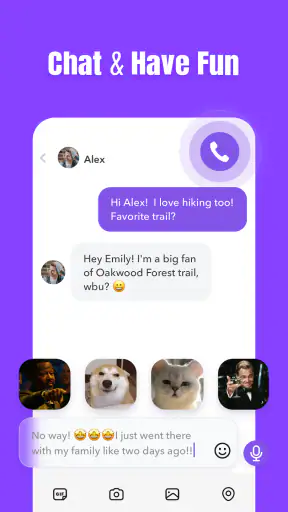
One practical tip is to avoid treating every match as a commitment. A match is only an invitation to start a conversation, not proof of compatibility. I recommend keeping your first message specific to something visible in the person’s profile. This gives you a better test of their communication style than a generic compliment and helps you decide quickly whether the interaction feels natural.
Speed expectations and the importance of the connection around you
There are two kinds of speed to consider here. The first is how quickly the app responds when you open screens, browse, or move between conversations. The second is how quickly you receive worthwhile replies. The first depends on your phone and network; the second depends mostly on the people you meet. It would be misleading to judge the entire service by either one alone.
For ordinary use, I would approach Duet Dating with moderate expectations rather than expecting every action to feel instantaneous. Dating apps often handle profile images, conversations, and account activity at the same time, so a weak mobile connection can make any social app feel less responsive. If a screen seems slow, switching between Wi-Fi and mobile data is a sensible first check before assuming the app is at fault.
The more important question is whether the app helps you reach a useful conversation without wasting your attention. In that respect, speed is not just about loading time. A fast stream of unsuitable profiles is not more valuable than a smaller set that gives you a reason to pause. Duet Dating’s appeal is strongest when you measure progress by the quality of exchanges rather than by how many profiles you can process in a few minutes.
What happens during heavier use
Heavier use usually means more than leaving the app open for a long time. It can involve browsing for an extended session, checking several profiles, exchanging many messages, and returning repeatedly throughout the day. Those actions place more demand on a phone than a short check-in, particularly when the device is older or already managing many background tasks.
I would use a simple routine to keep the experience comfortable: browse in short sessions, close the app when you are finished, and avoid running it alongside demanding games or video apps if your phone is already struggling. This is not a special requirement unique to Duet Dating; it is a sensible way to reduce heat, battery drain, and general sluggishness on any phone used for image-heavy social services.
The app’s current version is 2.77.1, which indicates an actively maintained product rather than a one-time release. Still, a current version does not guarantee identical performance on every device. Android phones vary widely in memory, processor speed, screen size, and operating-system behavior. If you use an older handset, the realistic expectation is adequate performance for short sessions, with more chance of pauses when the phone is under broader load.
A less obvious heavy-use issue is attention fatigue. Even if the app runs smoothly, repeatedly checking for new matches or replies can make the experience feel demanding. I think Duet Dating works better when you set a clear purpose for each visit: review a few profiles, answer existing messages, or start one thoughtful conversation. That workflow is more efficient than opening the app every few minutes without knowing what you want from it.
Reliability, interruptions, and recovering from problems
Reliability in a dating app is not only about whether it opens. It also includes whether conversations remain understandable, whether your progress feels consistent, and whether you can return to an interaction after an interruption. Network changes, background restrictions, and temporary service problems can affect any of these areas.
If the app stops responding, I would begin with the least disruptive fixes: check the connection, close and reopen the app, and make sure the installed version is current. On Android, restarting the phone can also clear temporary system issues. I would not jump straight to reinstalling because a dating app contains personal conversations and account activity; it is better to try basic recovery first and make sure you know how you will sign back in.
Another useful habit is to avoid writing a long, emotionally important message in the app before sending it. For a detailed introduction, I would draft the text elsewhere and then paste it into the conversation. That protects you from losing your words if the connection drops or the app closes unexpectedly. It also gives you a chance to reread the message before sending it, which is valuable when first impressions matter.
When a conversation seems to disappear or a reply does not appear immediately, patience is wiser than repeatedly tapping buttons. Repeated actions can create confusion, especially if the network is slow and the interface has not yet refreshed. Give the app a moment, reopen the relevant screen, and check the conversation again. This small recovery habit prevents accidental duplicate messages and unnecessary frustration.
Device constraints and the cost of convenience
Duet Dating is free to download and use as an app, but it includes optional in-app purchases ranging from $4.99 to $359.99 per item. That is a wide range, so I would be careful about treating paid options as part of the basic experience. Before spending anything, decide what problem you are trying to solve and whether the free experience already lets you meet and talk to people in a satisfactory way.
My advice is to avoid purchasing simply because you feel impatient. If your local pool is small or replies are infrequent, paying may not fix the underlying issue. A premium option can only be worthwhile when it gives you a useful advantage for the way you already use the service. Set a personal spending limit before exploring purchases, and review the wording carefully so that you understand whether you are paying for a one-time item or something that may continue.
The app requires Android 10 or later, which places a clear boundary around device compatibility. Anyone using an older Android release will need a newer supported device or a different dating service. For people on a compatible phone, the main constraints are likely to be available storage, memory, battery condition, and connection quality rather than the age requirement itself.
Because this is a mature social app rated for adults aged 17 and over, I would also treat the social side as seriously as the technical side. Keep personal details private until trust has developed, be cautious about moving conversations elsewhere too quickly, and arrange any first meeting in a public place. The app can help people connect, but it cannot replace your judgment about identity, intentions, or safety.
Who will get the most from it?
I would recommend Duet Dating to an adult who wants a more intentional dating experience and is willing to put effort into conversation. It is a good fit if you prefer reading profiles, noticing compatibility clues, and giving a promising match enough time to show how they communicate. It may also suit someone who has become frustrated with platforms where quantity and constant swiping dominate the experience.
The app is less convincing for users who need a very broad local audience immediately. It is also not my first choice for someone who wants a purely casual social feed, a friendship-first community, or a highly structured matchmaking process with extensive guidance. Those users may find a larger general dating platform or a specialized service more efficient.
People who dislike paying for optional extras should remain comfortable using the free tier before considering anything else. Since the purchase range reaches a substantial amount at the upper end, I would never approach the app with the assumption that spending more automatically leads to better matches. Your profile, location, availability, and communication habits still matter more than a purchase.
Three practical ways to use it more intelligently
First, use your opening message as a compatibility filter rather than a performance. Ask something that invites a real answer and then notice whether the reply has effort behind it. This quickly reveals whether the person wants an actual exchange or is only responding mechanically.
Second, separate browsing time from conversation time. If you continuously switch between discovering new people and replying to existing matches, it is easy to neglect the conversations that could become meaningful. I would spend one short session reviewing potential matches, then another focused session answering people I have already chosen to engage with.
Third, judge the app after a fair routine rather than one disappointing evening. A quiet period may reflect local activity, timing, or the availability of suitable matches rather than a technical failure. Give yourself a consistent approach, but do not keep using it indefinitely if the local audience does not meet your needs. Knowing when to switch services is part of using a dating app well.
There is also a useful emotional boundary: do not let the app become your only source of social momentum. If a conversation stalls, that is normal in online dating and does not necessarily say anything about your value. Duet Dating is best treated as one way to meet people, not as a daily test that determines whether you are interesting or desirable.
My performance and usability verdict
Duet Dating has a clear identity, a free entry point, and a social purpose that will appeal to people looking for resonance rather than endless swiping. The developer has continued updating it, and its audience is large enough to make trying it reasonable. The 3.8 average rating shows that it is not a flawless experience, so I would install it with realistic expectations about local activity, device behavior, and the uneven nature of online conversations.
From a performance perspective, I would call it a practical app for ordinary check-ins and focused conversations, provided your phone runs Android 10 or later and has a dependable connection. I would not choose it solely for speed, nor would I assume that a newer version eliminates every interruption. Its strongest performance advantage is really behavioral: the app encourages a more deliberate pace, which can make your time feel better spent even when the number of interactions is modest.
My recommendation is to try the free experience first, keep your sessions purposeful, and spend only if a specific feature genuinely improves your routine. Choose it if you want a thoughtful dating environment and are prepared to participate actively. Skip it in favor of a larger or more specialized alternative if your priority is maximum local reach, instant activity, or a completely different kind of social connection.
In short, this is not an app I would recommend as a guaranteed shortcut to dating success. I would recommend it as a measured place to begin meeting people who may share your outlook. Its value comes from how carefully you use it: read with attention, message with personality, protect your privacy, and judge the quality of the conversations rather than the speed of the feed.


